

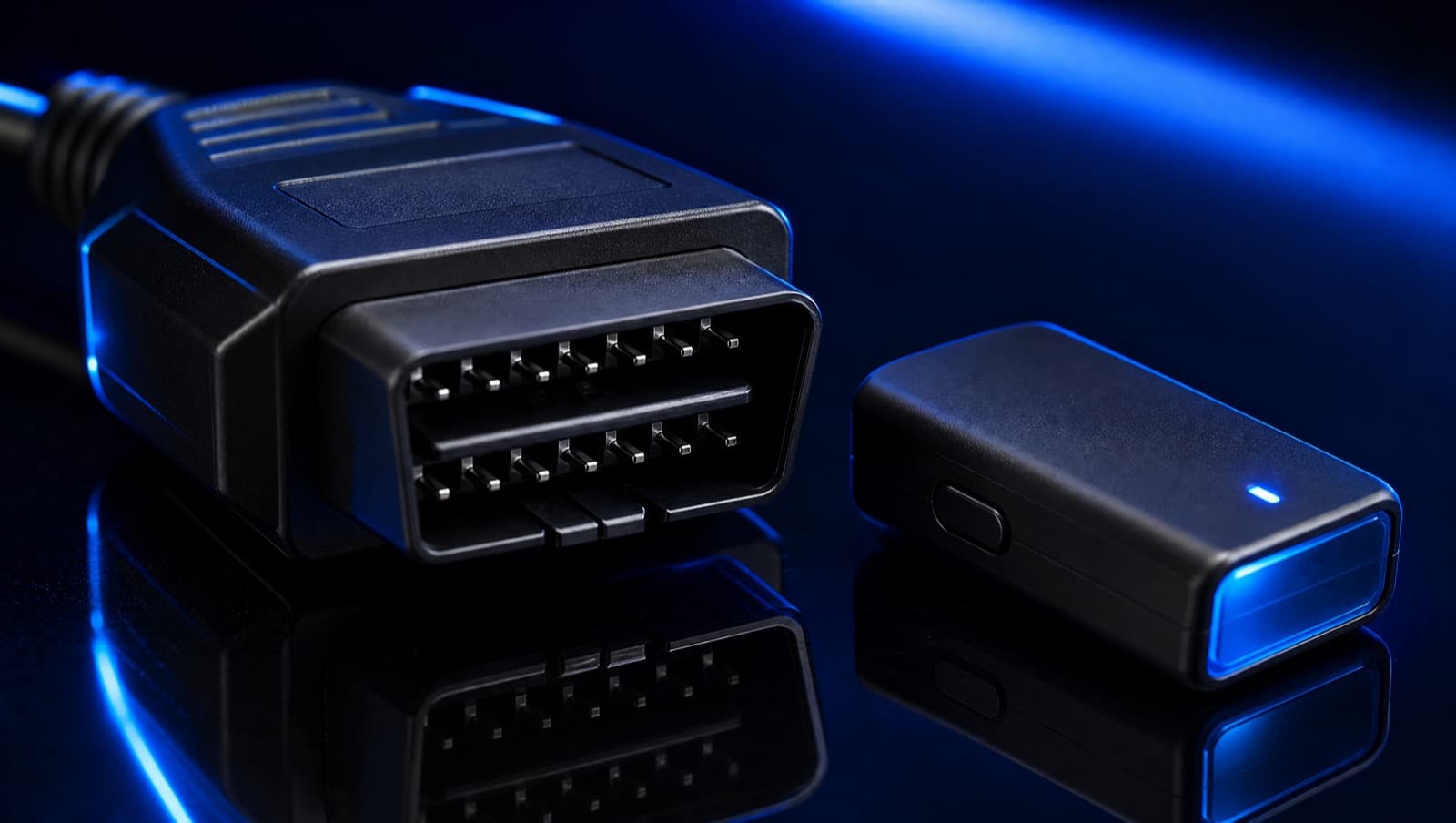
OBD-II stands for On-Board Diagnostics, second generation. It's a standard built into virtually every petrol car sold since the mid-2000s that lets a device read what the car's computer knows about itself, from fault codes to live sensor data.
Where the OBD-II port is
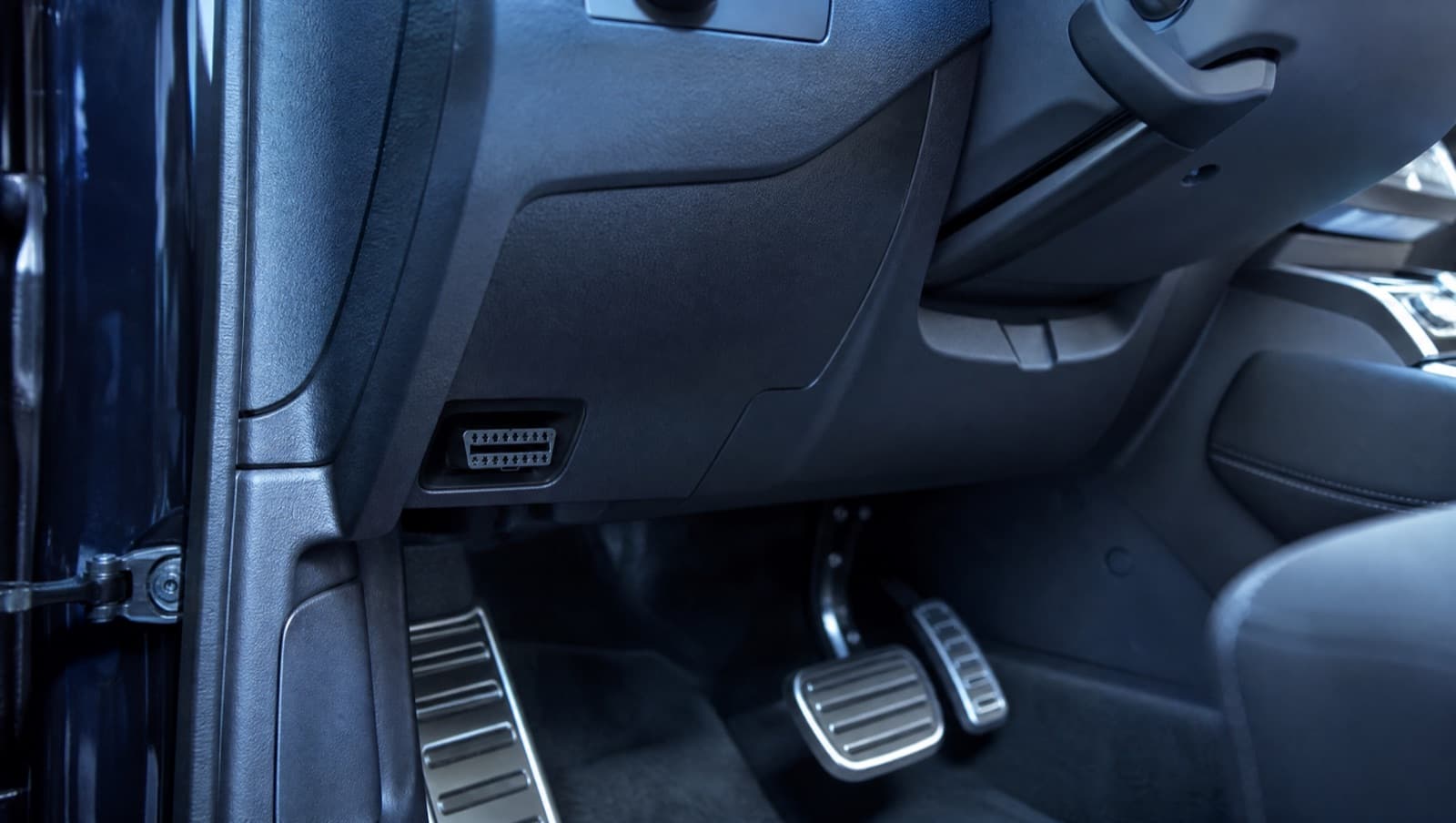
It's a 16-pin trapezoidal socket, almost always within reach of the driver's seat, usually under the dashboard near the steering column. An adapter plugged into it draws power from the car, so no batteries are needed.
What OBD-II can tell you
- •Diagnostic trouble codes (DTCs): stored, pending, and permanent faults.
- •Live data: engine RPM, coolant temperature, battery voltage, throttle, and more.
- •Emissions readiness monitors used in inspections.
- •The vehicle identification number (VIN) on many cars.
What OBD-II can't do
Standard OBD-II is for diagnostics, not deep manufacturer functions. It doesn't read firmware, private files, the immobiliser, or the odometer, and it isn't ECU flashing or coding. A responsible app stays within this standard scope, which is exactly what keeps it safe to use.
How to read your car with OBD-II

Pair a Bluetooth OBD-II adapter with your iPhone or iPad, plug it in, turn the ignition on, and scan. AutoMalaya OBD reads the codes and explains them in plain English, with likely causes, repair priority, and an approximate Malaysia cost range, so a warning light becomes a clear next step instead of a mystery.