

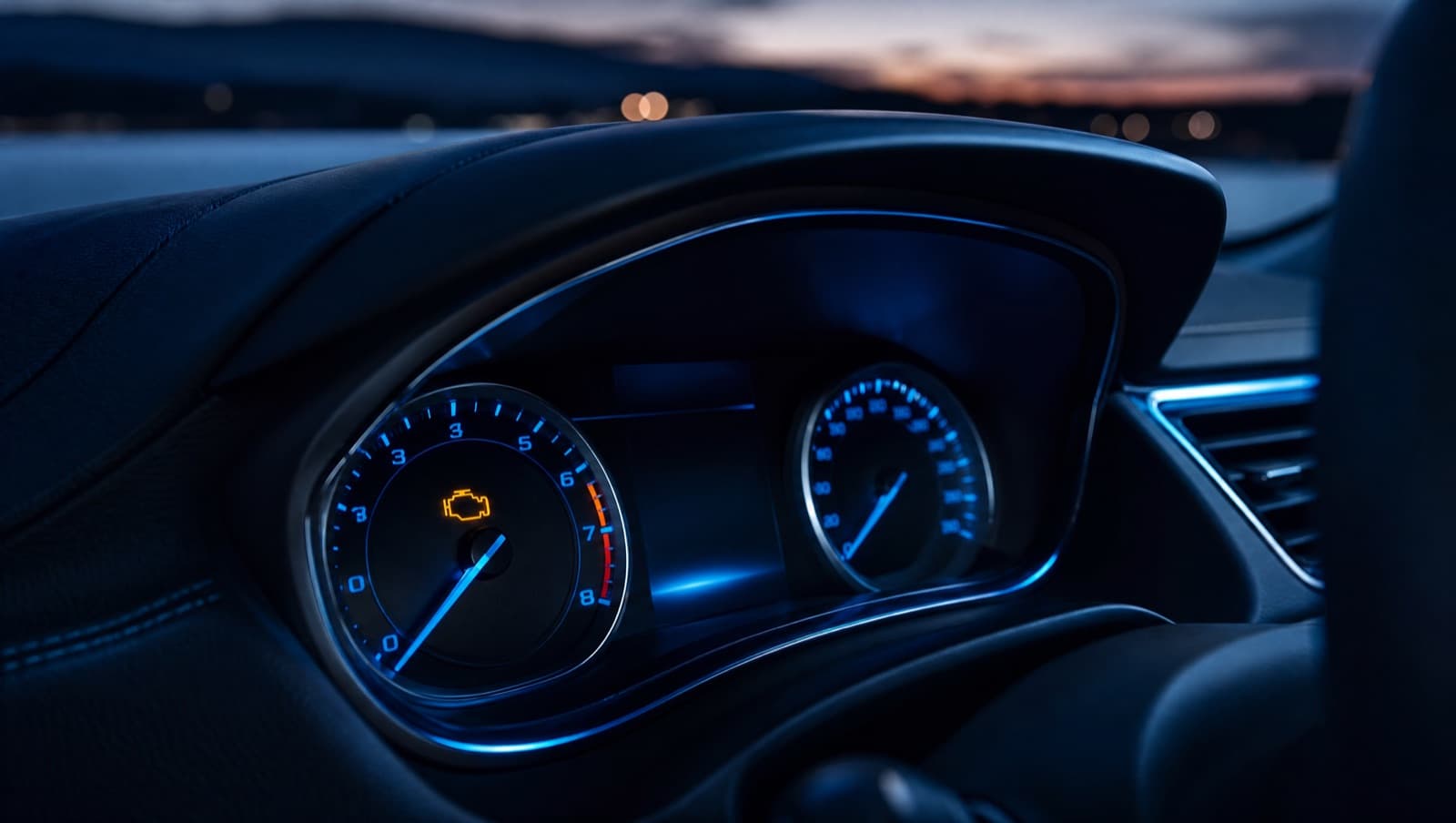
The check-engine light is one of the most misunderstood warnings on your dashboard. It doesn't tell you what's wrong, only that the car's computer has noticed something it doesn't like. The good news: most of the time it isn't an emergency, and you can find out what triggered it in a couple of minutes.
What the check engine light actually means
When a sensor reading falls outside the expected range, the engine control unit (ECU) stores a diagnostic trouble code (DTC) and turns on the light. The code is the useful part. It points to a system, such as ignition, fuel, emissions, or a specific sensor, so a repair can start from facts instead of guesswork.
Two patterns matter most. A steady light means a fault is logged but the car considers it non-critical. A flashing light means an active, potentially damaging condition, most often a misfire that can harm the catalytic converter.
Is it safe to keep driving?

- •Steady light, car drives normally: usually safe to drive to a workshop soon.
- •Flashing light: reduce power, avoid hard acceleration, and get it checked promptly.
- •Light plus a real symptom (overheating, loss of power, strange noise): stop and reassess.
How to find out what's wrong
You don't need to visit a workshop just to read the code. A small Bluetooth OBD-II adapter plugs into the port under your dashboard and talks to your iPhone or iPad. In under a minute you can read the stored codes, see live data such as coolant temperature and battery voltage, and check whether the fault is still active.
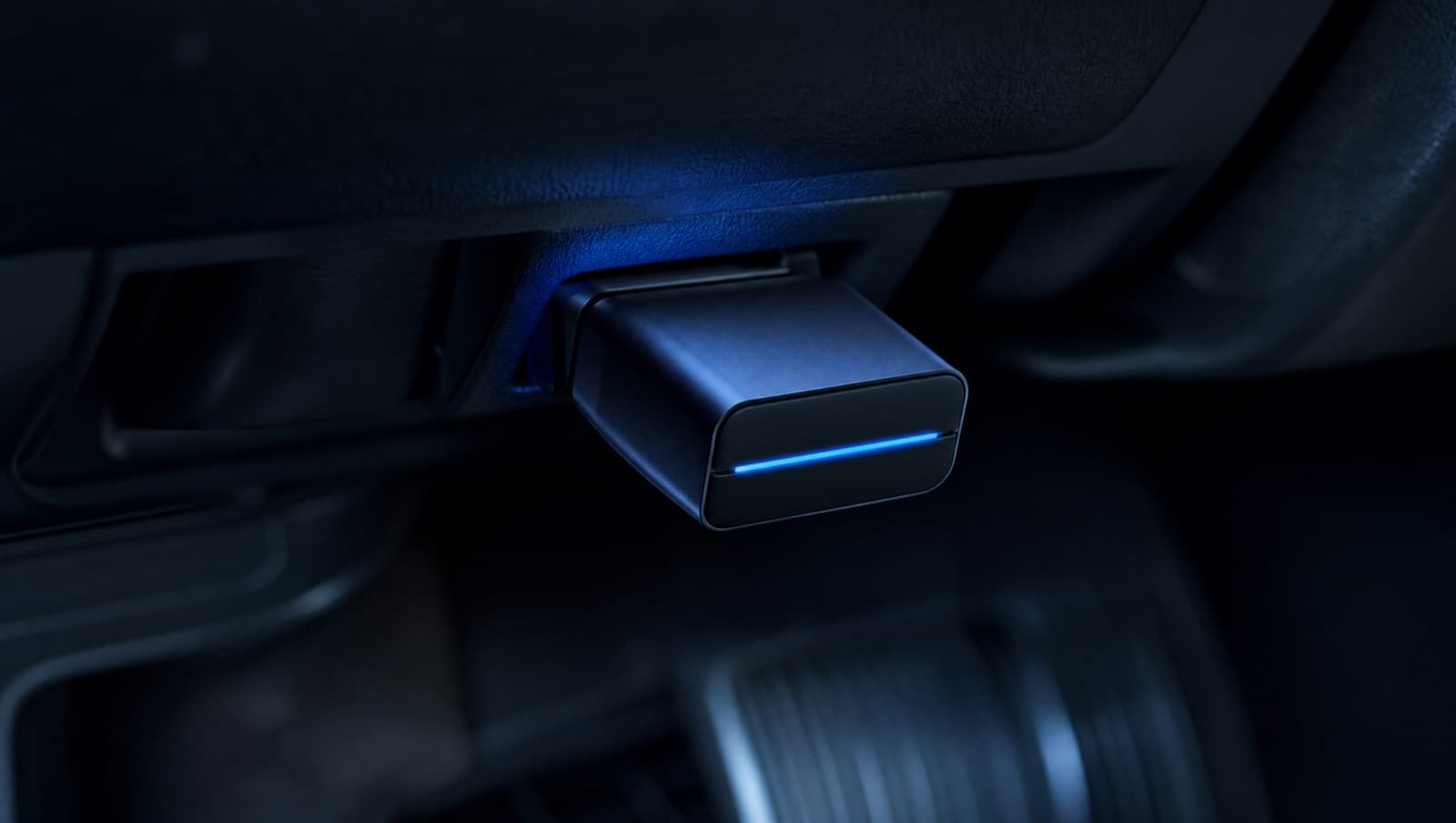
AutoMalaya OBD turns that raw code into a plain-English explanation: what it means, the likely causes ranked by probability, how urgent it is, and an approximate Malaysia repair-cost range so you can sanity-check a quote.
What to do next
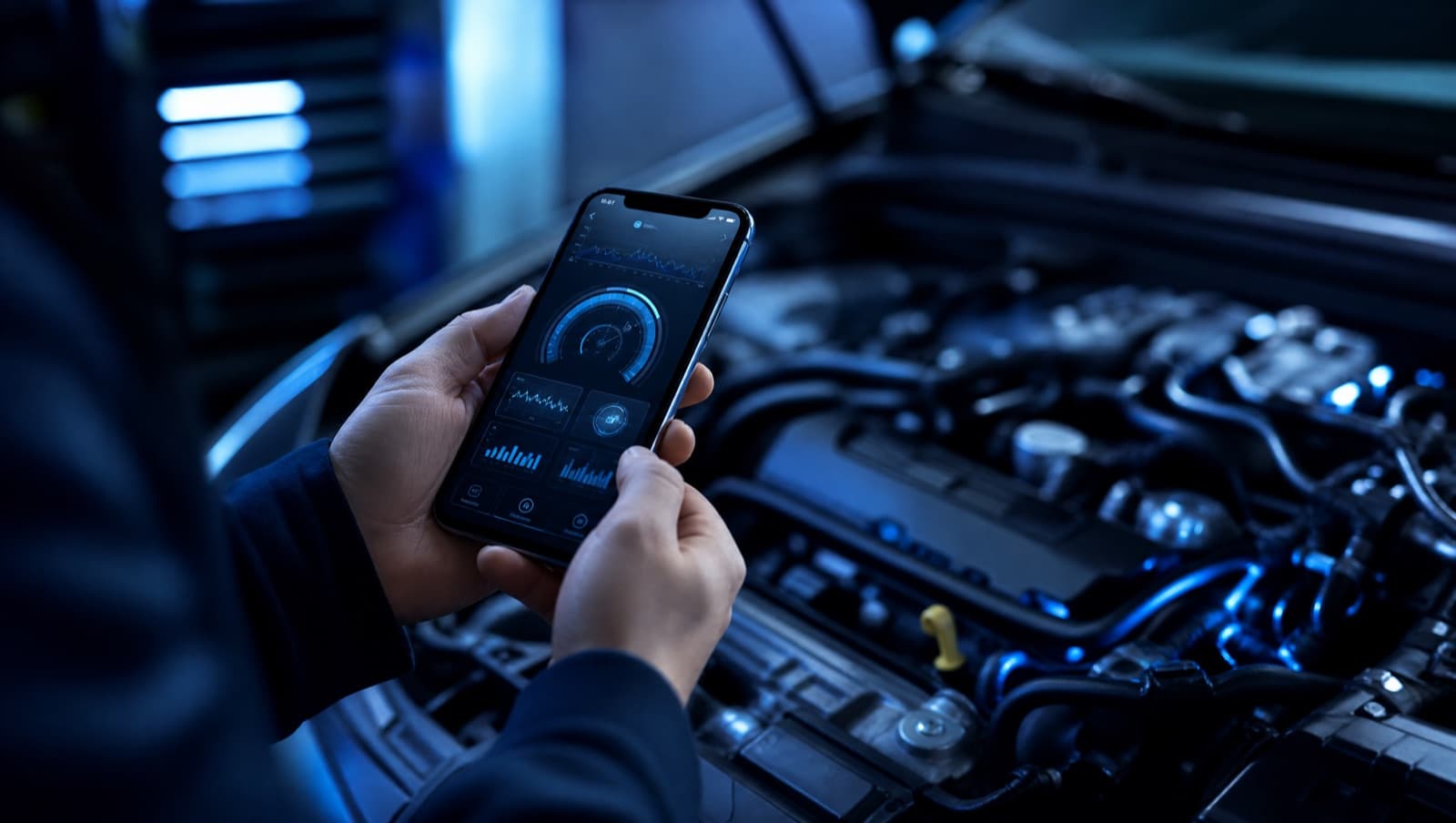
- •Read the code and note whether the light is steady or flashing.
- •Check simple things first, like a loose fuel cap for EVAP codes.
- •Export a report and share it with your mechanic so you both start from the same facts.
- •Re-scan after a repair to confirm the code doesn't return.
Clearing the code without fixing the cause only resets the light temporarily, and it wipes readiness monitors that an inspection may need. Fix the cause, then clear.